H H D
What are the typical applications of hook and loop fasteners in daily life?
2025-06-10
 |
 |
 |
Introduction
Hook and loop fasteners may look simple, but their manufacturing process involves multiple precision stages and specialized equipment to achieve stable performance, strong fastening force, and consistent quality.
From raw yarn preparation to weaving, hook formation, surface treatment, dyeing, adhesive coating, and final cutting, every production step plays an important role in determining the final characteristics of the hook and loop tape.
A professional hook and loop production line usually includes several key machines, such as warping machines, needle looms, hook cutting machines, brushing machines, dyeing equipment, adhesive coating machines, and slitting machines.
This article will introduce the complete manufacturing process of hook and loop fasteners and explain the function of each production stage.
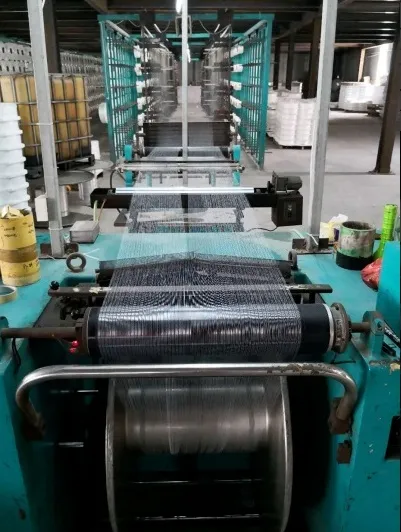
1. Yarn Preparation and Warping Process
Warping Machine
The first step in hook and loop production is yarn preparation.
The warping machine arranges multiple yarns according to the required width and density, then winds them evenly onto a warp beam for the weaving process.
This stage is essential for maintaining:
▪ Uniform yarn arrangement
▪ Stable yarn tension
▪ Consistent tape structure
▪ Improved weaving efficiency
Proper warping helps ensure that the final hook and loop tape has stable dimensions, smooth appearance, and reliable mechanical performance.
2. Weaving Process: Producing Hook and Loop Tape
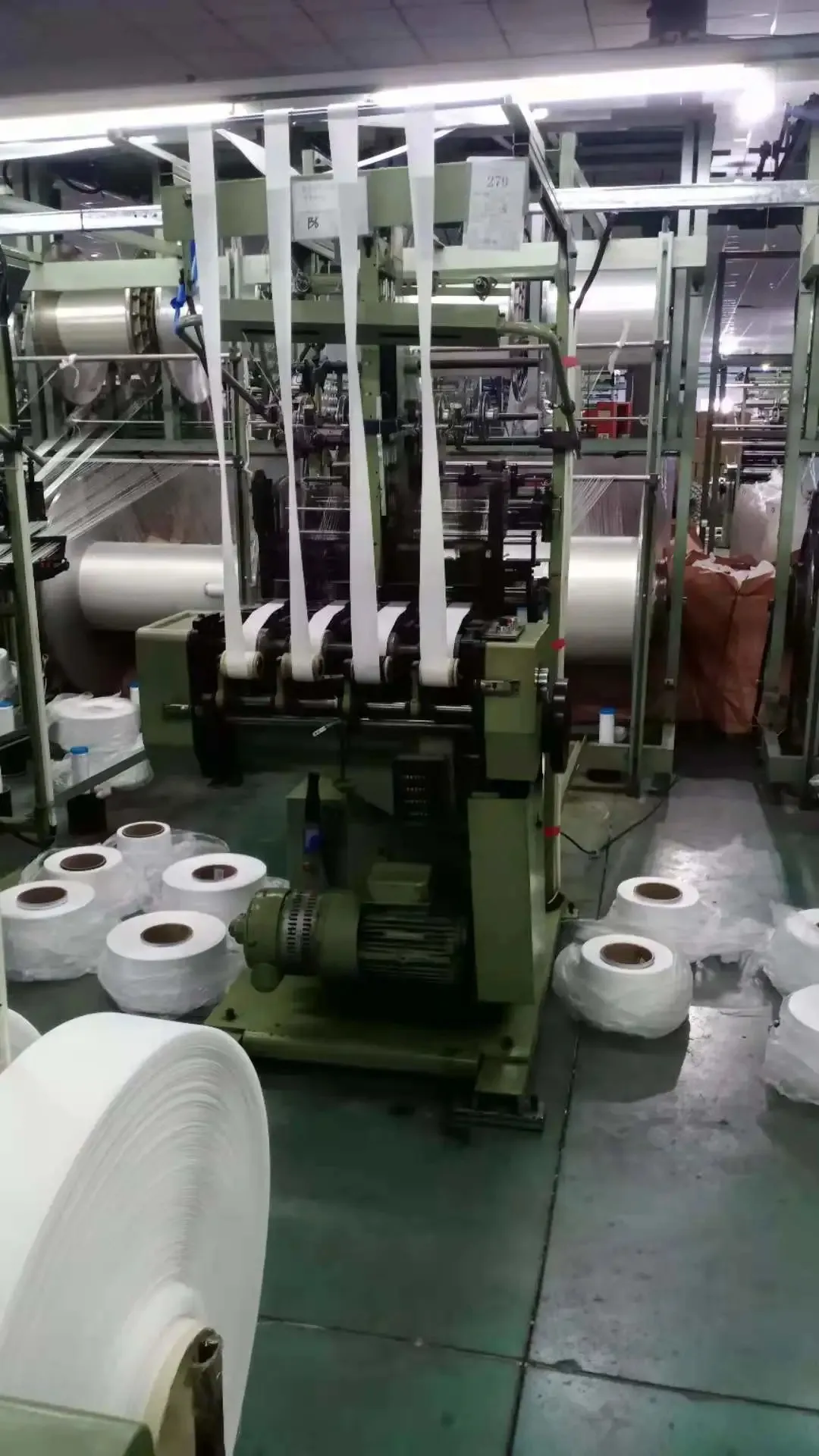
Hook and Loop Needle Loom
The needle loom is the core equipment in the hook and loop manufacturing process.
During weaving, the machine creates the basic tape structure and determines whether the product becomes:
▪ Hook tape
▪ Loop tape
The weaving process directly affects important product characteristics, including:
▪ Tape thickness
▪ Density
▪ Tensile strength
▪ Surface structure
▪ Overall durability
Advanced needle loom technology allows manufacturers to produce different specifications and customized hook and loop tapes for various applications.
3. Hook Formation Process
Hook Cutting Machine
After weaving, the hook side requires additional processing to create the fastening structure.
The hook cutting machine cuts the woven fiber loops into individual hooks, forming the characteristic hook surface of the fastener.
This process determines:
▪ Hook density
▪ Hook shape
▪ Engagement strength
▪ Peel and shear performance
A precise hook cutting process ensures that the hook surface provides reliable attachment while maintaining long-term durability.
4. Loop Surface Raising Process
Hook and Loop Brushing Machine
The loop side requires brushing treatment to create a soft and dense fiber surface.
The brushing machine raises and aligns the fibers, improving the interaction between the loop surface and hooks.
This process helps achieve:
▪ Softer hand feel
▪ Higher engagement efficiency
▪ Better repeated opening and closing performance
Different brushing processes can be adjusted according to customer requirements, such as soft loop products, high-density loop fabrics, or specialized industrial applications.
5. Dyeing Process
Dyeing Machine
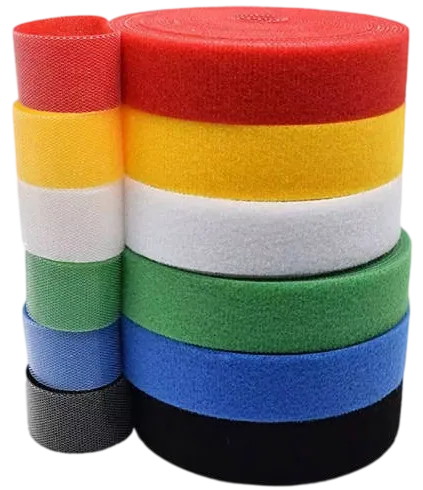
After weaving and surface treatment, hook and loop tapes can be dyed according to customer requirements.
The dyeing process provides:
▪ Uniform color appearance
▪ Strong color fastness
▪ Wide color selection
Professional dyeing technology ensures stable color quality while maintaining the original mechanical properties of the tape.
6. Adhesive Coating and Backing Process
Adhesive Coating and Molding Machine
For adhesive hook and loop products, an additional coating process is required.
The adhesive coating machine applies a controlled layer of adhesive to the back surface of the tape and uses heating and molding technology to improve bonding performance.
This process is commonly used for:
▪ Self-adhesive hook and loop tape
▪ Industrial adhesive fasteners
▪ Custom mounting solutions
Different adhesive systems can be selected according to application requirements, including general-purpose adhesive, high-temperature adhesive, and special industrial adhesive solutions.
7. Slitting and Final Processing
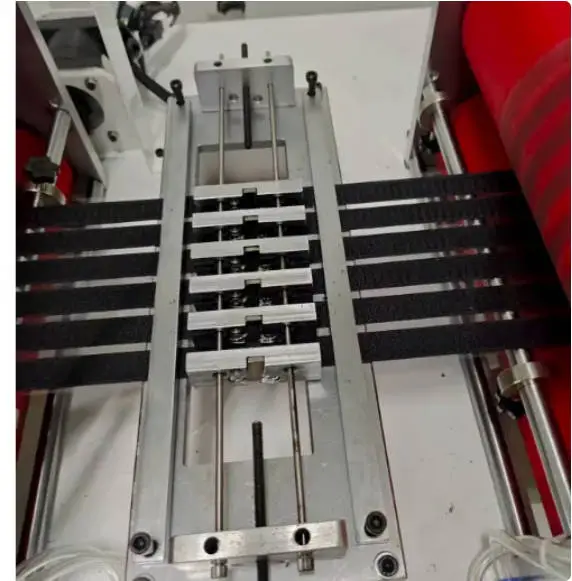
Cutting and Slitting Machine
The final production stage is cutting and slitting.
The large rolls of hook and loop tape are processed into specific widths and lengths according to customer requirements.
This stage ensures:
▪ Accurate dimensions
▪ Clean edges
▪ Reduced fraying
▪ Convenient packaging
After inspection, the finished products are ready for shipment and application in different industries.
8. Quality Control During Hook and Loop Production
A complete hook and loop manufacturing process requires strict quality control throughout every stage.
Important inspection items include:
▪ Tape width and thickness
▪ Hook and loop engagement strength
▪ Peel strength
▪ Tensile strength
▪ Color consistency
▪ Adhesive performance
▪ Repeated opening and closing durability
For specialized products, additional testing may be required, such as:
▪ Flame resistance testing
▪ High-temperature resistance testing
▪ Anti-static performance testing
▪ Chemical resistance evaluation
9. Different Production Processes for Different Applications
Not all hook and loop products use the same manufacturing process.
Depending on the final application, manufacturers may develop different solutions:
Standard Hook and Loop Tape
Used in:
▪ Clothing
▪ Shoes
▪ Bags
▪ Household products
Adhesive Hook and Loop Tape
Used in:
▪ Electronics
▪ Automotive interiors
▪ Display products
▪ Industrial mounting
Flame-Resistant Hook and Loop
Used in:
▪ Protective equipment
▪ Industrial safety products
▪ Special environments
High-Temperature Hook and Loop
Used in:
▪ Industrial equipment
▪ Robot protection covers
▪ High-temperature applications
Different industries require different materials, structures, and production technologies.
Conclusion
The manufacturing of hook and loop fasteners involves multiple advanced processes, from yarn preparation and weaving to hook formation, brushing, dyeing, adhesive coating, and final cutting.
Each production stage has a direct impact on the final product’s strength, appearance, durability, and application performance.
With increasing demand for customized and functional fastening solutions, professional hook and loop manufacturers need not only advanced production equipment but also strong engineering capabilities and process control.
A complete hook and loop production line enables manufacturers to provide reliable solutions for industries including textiles, medical products, automotive, industrial equipment, and specialized applications.
|
|
|
Introduction
Hook and loop fasteners may look simple, but their manufacturing process involves multiple precision stages and specialized equipment to achieve stable performance, strong fastening force, and consistent quality.
From raw yarn preparation to weaving, hook formation, surface treatment, dyeing, adhesive coating, and final cutting, every production step plays an important role in determining the final characteristics of the hook and loop tape.
A professional hook and loop production line usually includes several key machines, such as warping machines, needle looms, hook cutting machines, brushing machines, dyeing equipment, adhesive coating machines, and slitting machines.
This article will introduce the complete manufacturing process of hook and loop fasteners and explain the function of each production stage.
1. Yarn Preparation and Warping Process
Warping Machine
The first step in hook and loop production is yarn preparation.
The warping machine arranges multiple yarns according to the required width and density, then winds them evenly onto a warp beam for the weaving process.
This stage is essential for maintaining:
▪ Uniform yarn arrangement
▪ Stable yarn tension
▪ Consistent tape structure
▪ Improved weaving efficiency
Proper warping helps ensure that the final hook and loop tape has stable dimensions, smooth appearance, and reliable mechanical performance.
2. Weaving Process: Producing Hook and Loop Tape
Hook and Loop Needle Loom
The needle loom is the core equipment in the hook and loop manufacturing process.
During weaving, the machine creates the basic tape structure and determines whether the product becomes:
▪ Hook tape
▪ Loop tape
The weaving process directly affects important product characteristics, including:
▪ Tape thickness
▪ Density
▪ Tensile strength
▪ Surface structure
▪ Overall durability
Advanced needle loom technology allows manufacturers to produce different specifications and customized hook and loop tapes for various applications.
3. Hook Formation Process
Hook Cutting Machine
After weaving, the hook side requires additional processing to create the fastening structure.
The hook cutting machine cuts the woven fiber loops into individual hooks, forming the characteristic hook surface of the fastener.
This process determines:
▪ Hook density
▪ Hook shape
▪ Engagement strength
▪ Peel and shear performance
A precise hook cutting process ensures that the hook surface provides reliable attachment while maintaining long-term durability.
4. Loop Surface Raising Process
Hook and Loop Brushing Machine
The loop side requires brushing treatment to create a soft and dense fiber surface.
The brushing machine raises and aligns the fibers, improving the interaction between the loop surface and hooks.
This process helps achieve:
▪ Softer hand feel
▪ Higher engagement efficiency
▪ Better repeated opening and closing performance
Different brushing processes can be adjusted according to customer requirements, such as soft loop products, high-density loop fabrics, or specialized industrial applications.
5. Dyeing Process
Dyeing Machine
After weaving and surface treatment, hook and loop tapes can be dyed according to customer requirements.
The dyeing process provides:
▪ Uniform color appearance
▪ Strong color fastness
▪ Wide color selection
Professional dyeing technology ensures stable color quality while maintaining the original mechanical properties of the tape.
6. Adhesive Coating and Backing Process
Adhesive Coating and Molding Machine
For adhesive hook and loop products, an additional coating process is required.
The adhesive coating machine applies a controlled layer of adhesive to the back surface of the tape and uses heating and molding technology to improve bonding performance.
This process is commonly used for:
▪ Self-adhesive hook and loop tape
▪ Industrial adhesive fasteners
▪ Custom mounting solutions
Different adhesive systems can be selected according to application requirements, including general-purpose adhesive, high-temperature adhesive, and special industrial adhesive solutions.
7. Slitting and Final Processing
Cutting and Slitting Machine
The final production stage is cutting and slitting.
The large rolls of hook and loop tape are processed into specific widths and lengths according to customer requirements.
This stage ensures:
▪ Accurate dimensions
▪ Clean edges
▪ Reduced fraying
▪ Convenient packaging
After inspection, the finished products are ready for shipment and application in different industries.
8. Quality Control During Hook and Loop Production
A complete hook and loop manufacturing process requires strict quality control throughout every stage.
Important inspection items include:
▪ Tape width and thickness
▪ Hook and loop engagement strength
▪ Peel strength
▪ Tensile strength
▪ Color consistency
▪ Adhesive performance
▪ Repeated opening and closing durability
For specialized products, additional testing may be required, such as:
▪ Flame resistance testing
▪ High-temperature resistance testing
▪ Anti-static performance testing
▪ Chemical resistance evaluation
9. Different Production Processes for Different Applications
Not all hook and loop products use the same manufacturing process.
Depending on the final application, manufacturers may develop different solutions:
Standard Hook and Loop Tape
Used in:
▪ Clothing
▪ Shoes
▪ Bags
▪ Household products
Adhesive Hook and Loop Tape
Used in:
▪ Electronics
▪ Automotive interiors
▪ Display products
▪ Industrial mounting
Flame-Resistant Hook and Loop
Used in:
▪ Protective equipment
▪ Industrial safety products
▪ Special environments
High-Temperature Hook and Loop
Used in:
▪ Industrial equipment
▪ Robot protection covers
▪ High-temperature applications
Different industries require different materials, structures, and production technologies.
Conclusion
The manufacturing of hook and loop fasteners involves multiple advanced processes, from yarn preparation and weaving to hook formation, brushing, dyeing, adhesive coating, and final cutting.
Each production stage has a direct impact on the final product’s strength, appearance, durability, and application performance.
With increasing demand for customized and functional fastening solutions, professional hook and loop manufacturers need not only advanced production equipment but also strong engineering capabilities and process control.
A complete hook and loop production line enables manufacturers to provide reliable solutions for industries including textiles, medical products, automotive, industrial equipment, and specialized applications.
The Right Hook And Loop Solution. Endless Possibilities.
Stay Connected
Copyright © 2026 Shenzhen Huiyu Hengtong Development Co.,Ltd